Rome Short Break Guide: How to Make the Most of 2 or 3 Days

A short break in Rome, Italy, gives you just enough time to see the big sights while still soaking up the atmosphere of the city. With 2–3 days, you can cover the essentials: the Colosseum, the Vatican and the historic centre all without feeling rushed, as long as you plan your days in a loose, sensible order. The city is compact, the metro is easy to use, and most landmarks are within walking distance of each other, so it’s a great destination for a well‑planned but relaxed getaway. We spent three nights and two days in Rome, which was enough for our legs, but we didn’t manage to fit in a visit to the Vatican, so I’ll add an itinerary for a third day should you want to spend longer in Rome.
A Quick Note
This article contains affiliate links. I may earn a small commission if you book through them, at no extra cost to you. Just so you know: I share the best travel finds I come across, but I’m not a travel agent, so I can’t offer custom quotes or change dates or airports.
Prices and availability can shift, so please double‑check everything with the travel provider before booking. Any booking you make is directly with them.
How to get to Rome from the UK
The closest airport to Rome is Ciampino (CIA), just 13–15 km from the city centre, but most people flying in for a short break arrive at Fiumicino (FCO). It’s the main international airport, has far better transport links into the city, and is usually where the best‑timed flights land. This is where we flew into. Outside peak season, return flights often sit around £60–£70 per person, and if you’re flexible, Ciampino can sometimes be even cheaper. I’ve seen short‑break returns with Ryanair for around £30.
Find the cheapest Direct flights from the UK to Rome Fiumicino
Find the Cheapest Direct flights from the UK to Rome Ciampino, Ryanair only
How to get to the centre of Rome from the two closest airports
From Rome Fiumicino Airport (FCO)
Train – Leonardo Express: A quick 30‑minute train to Termini, running every 15 minutes. Tickets are around £30 return. Even if you book a time slot, it’s a non‑reserved service, so you can board any train if your flight is delayed. Queues for the ticket machines can be long, so booking ahead helps.
Taxi – Fast and straightforward, usually €50–60 each way. Use the official white taxis outside the terminal and confirm the fare before you go. Taxis are easy to find in the centre of Rome; make sure you confirm the price back to the airport with the driver.
Bus – The cheapest option at around £7 each way (£14 return). Buses run every 20–30 minutes and take about an hour, depending on traffic. They drop you at Termini.
From Rome Ciampino Airport (CIA)
Train – Ciampino Airlink Take a 10‑minute shuttle bus to Ciampino station, then a regional train to Termini. The combined journey costs under €3.
Taxi – A fixed €40 each way to central Rome. Use official taxis and confirm the fare.
Bus – Around €5 each way, running every 20–30 minutes. The journey takes about 40 minutes, depending on traffic.
Our two day Itinerary for Rome
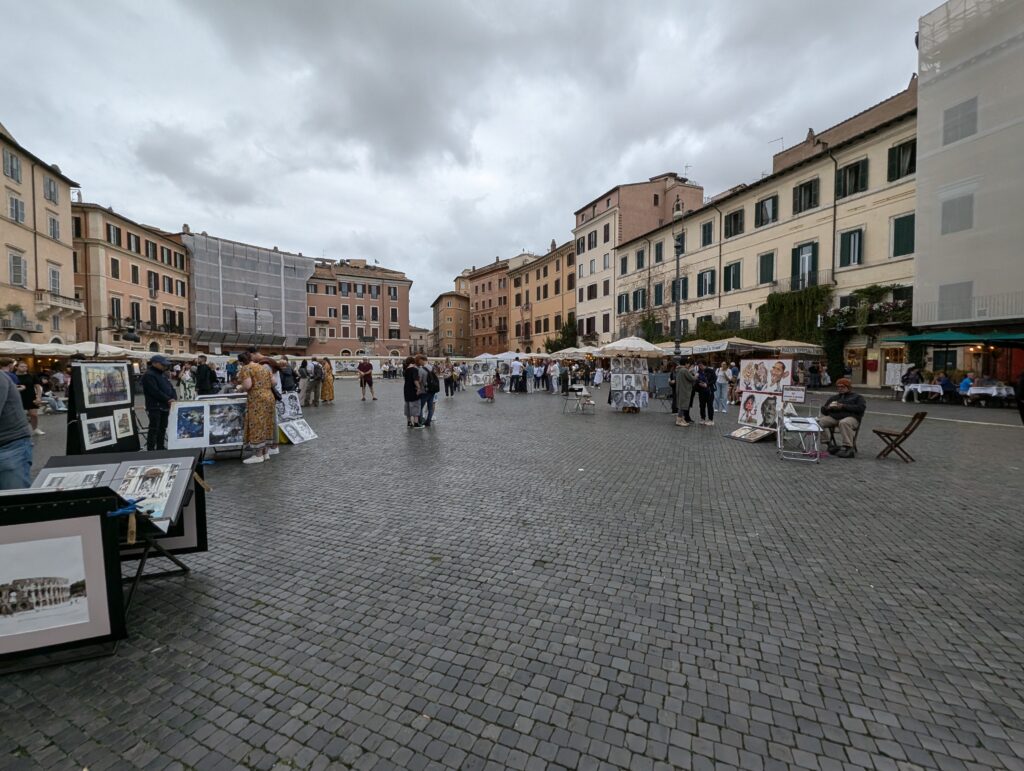
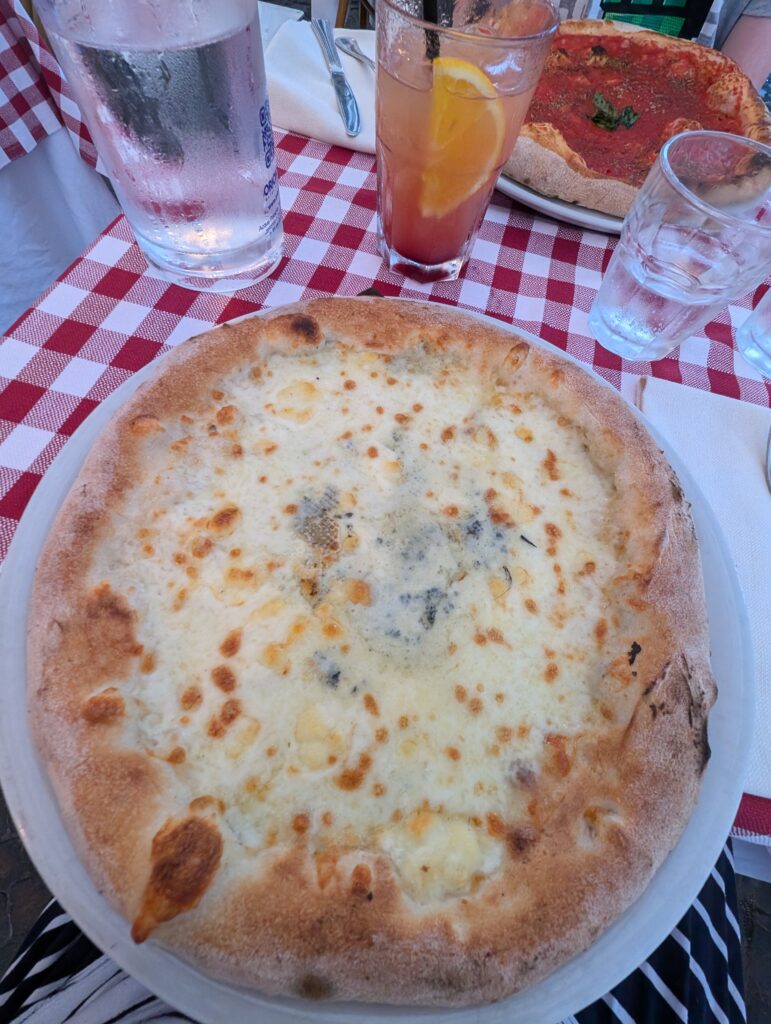
Our flight arrived mid-afteroon so as soon as we had checked in, we walked from our hotel to the Trevi fountain. Depending on where you are staying and what time you arrive, you could easily explore the area close to your hotel. We headed to the Piazza Navona for our first Italian meal. It’s worth knowing that although Italians are well known for their pizza, Rome isn’t the best place to eat pizza. This is a lovely baroque square with a charming market and beautiful fountains. It’s not cheap, and the food isn’t the best, but I wanted my son to sit somewhere with a beautiful view. On our way back to the hotel, we took a detour to look at the Pantheon in the dark and to sample some gelato.
To book any of the activities below, jump to “All the great things to do in the centre of Rome” below.
Day One in Rome
Morning:
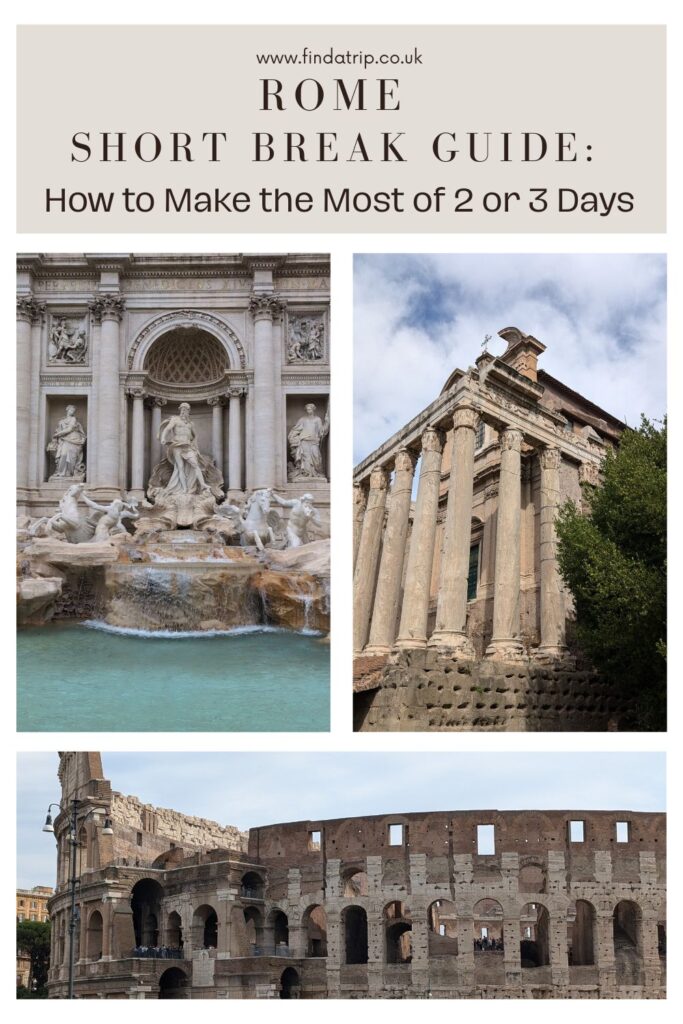
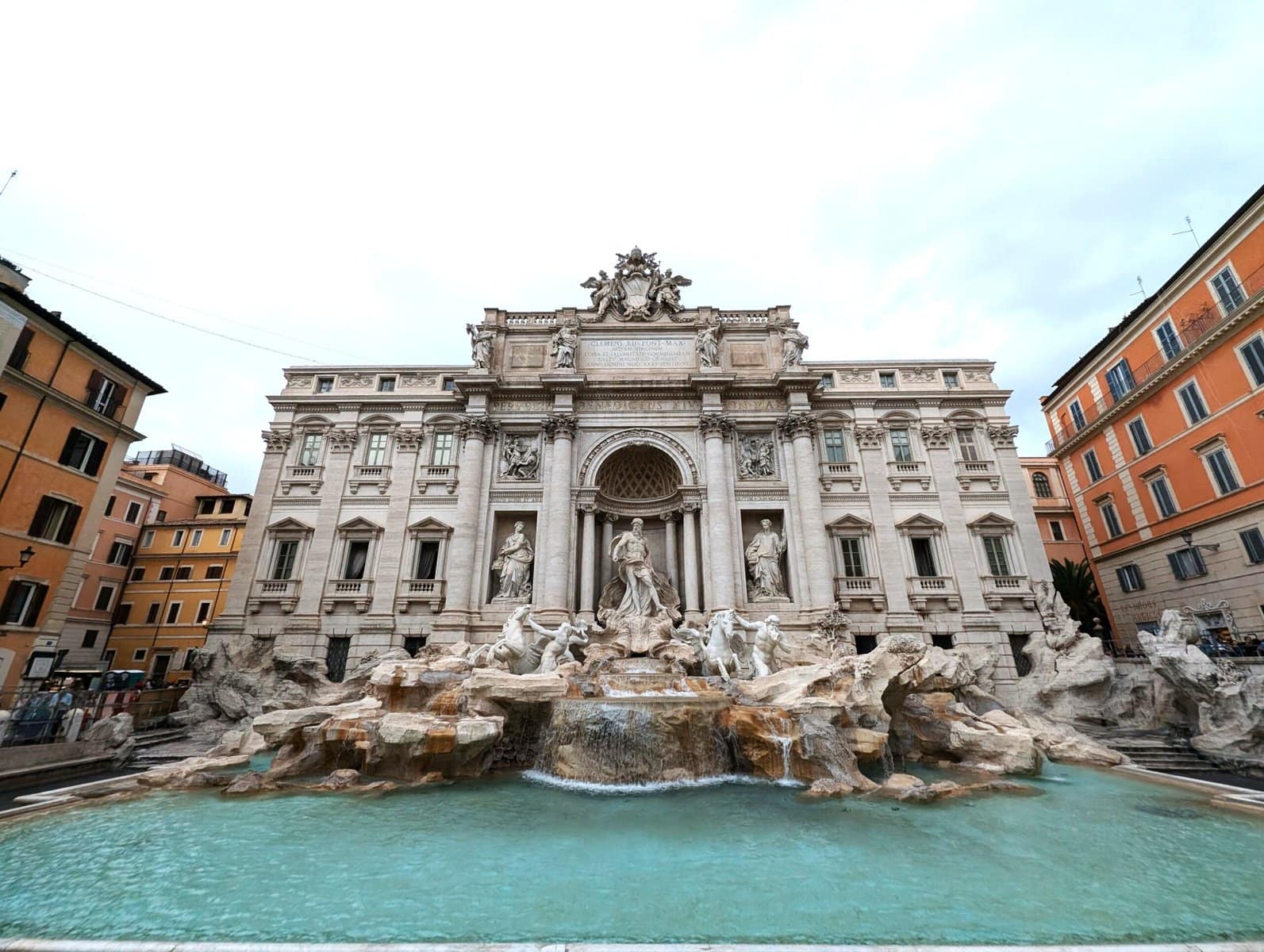
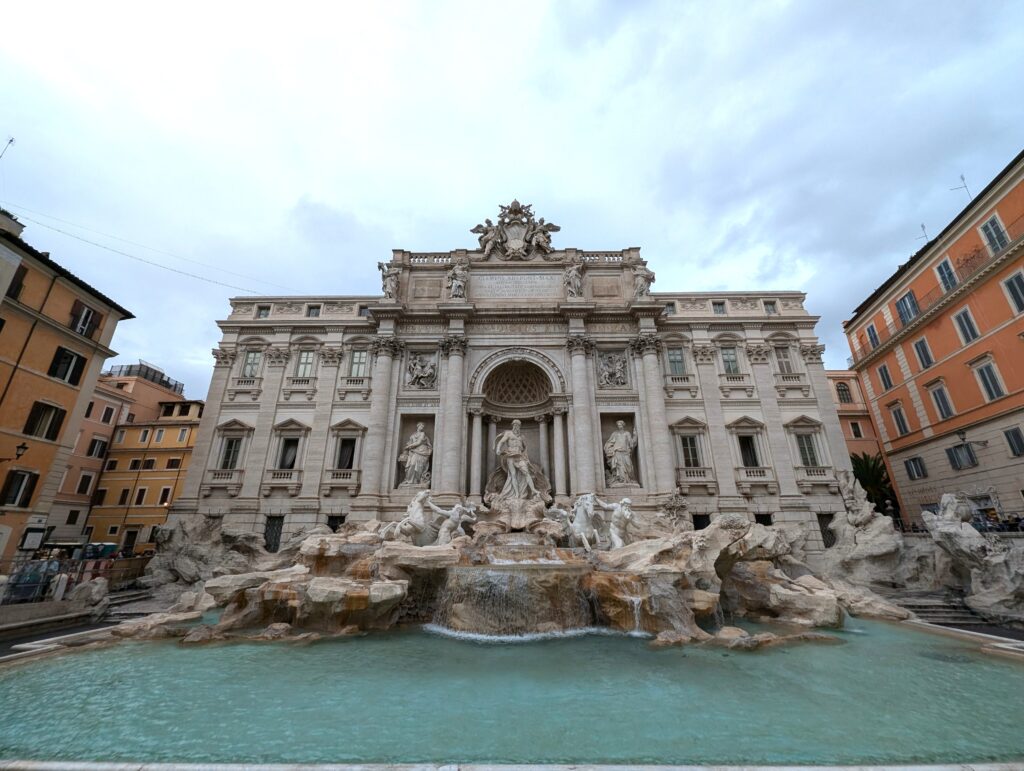
Start your day at the Trevi Fountain. There is now a 2e entrance; if you want to get close, you can look from a distance for free.
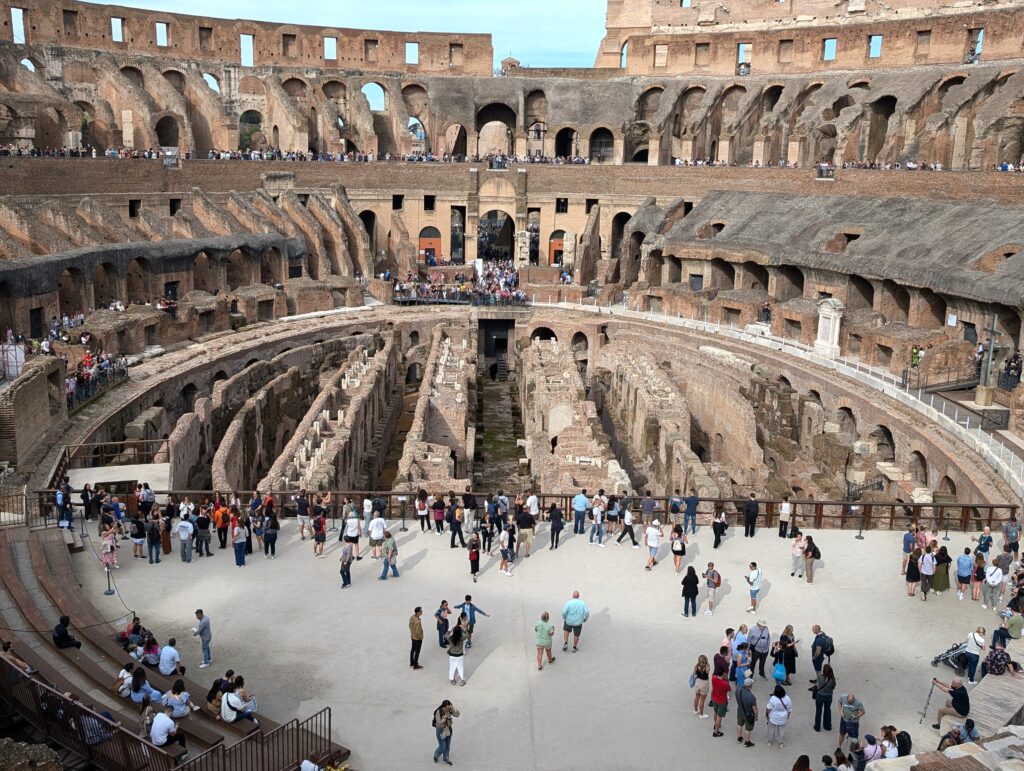
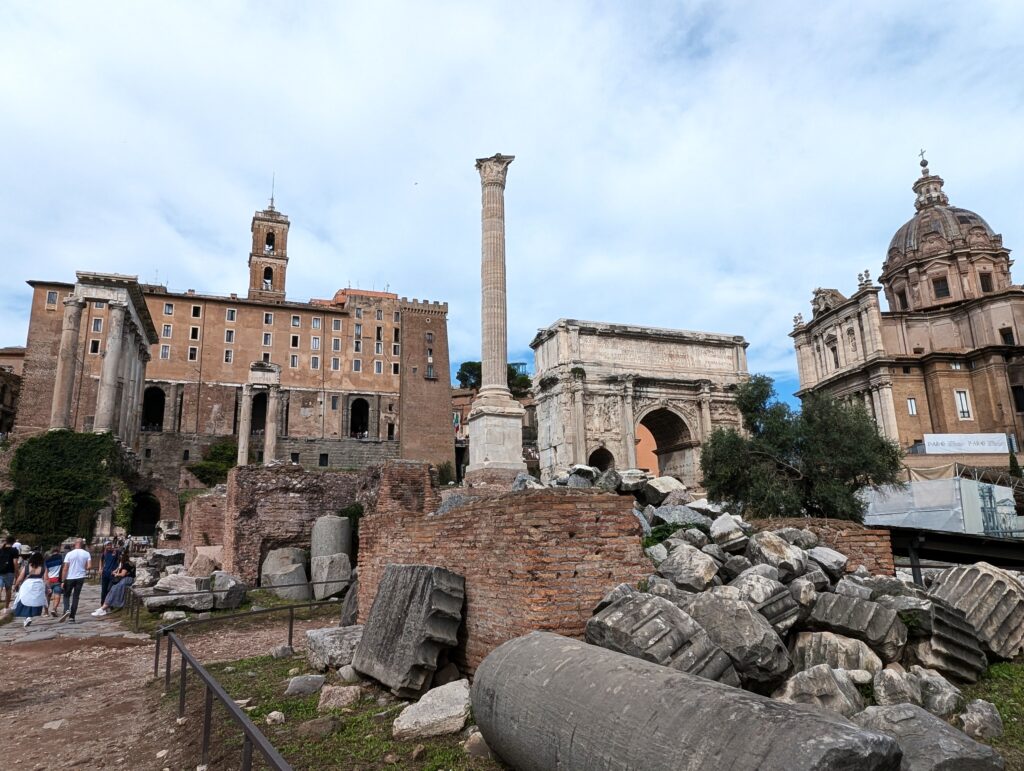
Followed by a short walk for a guided tour of the Colosseum with floor access.
Followed by The Forum with Palletine Hill – this was also included in our tour (see below)
Lunch:
Afternoon:
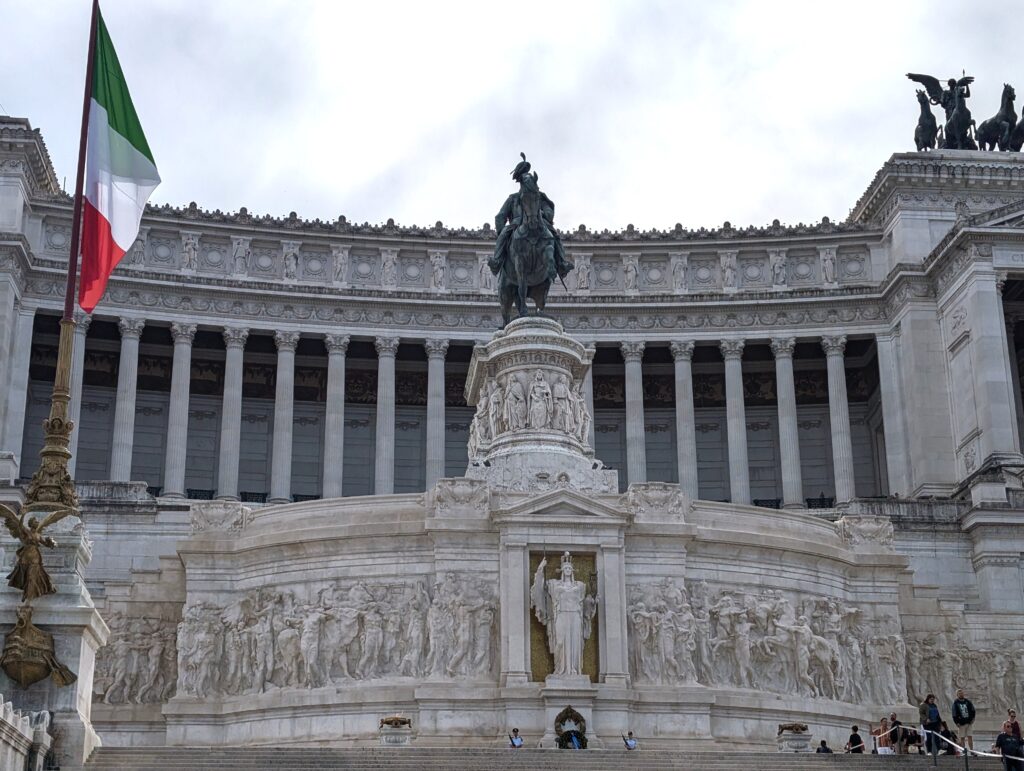
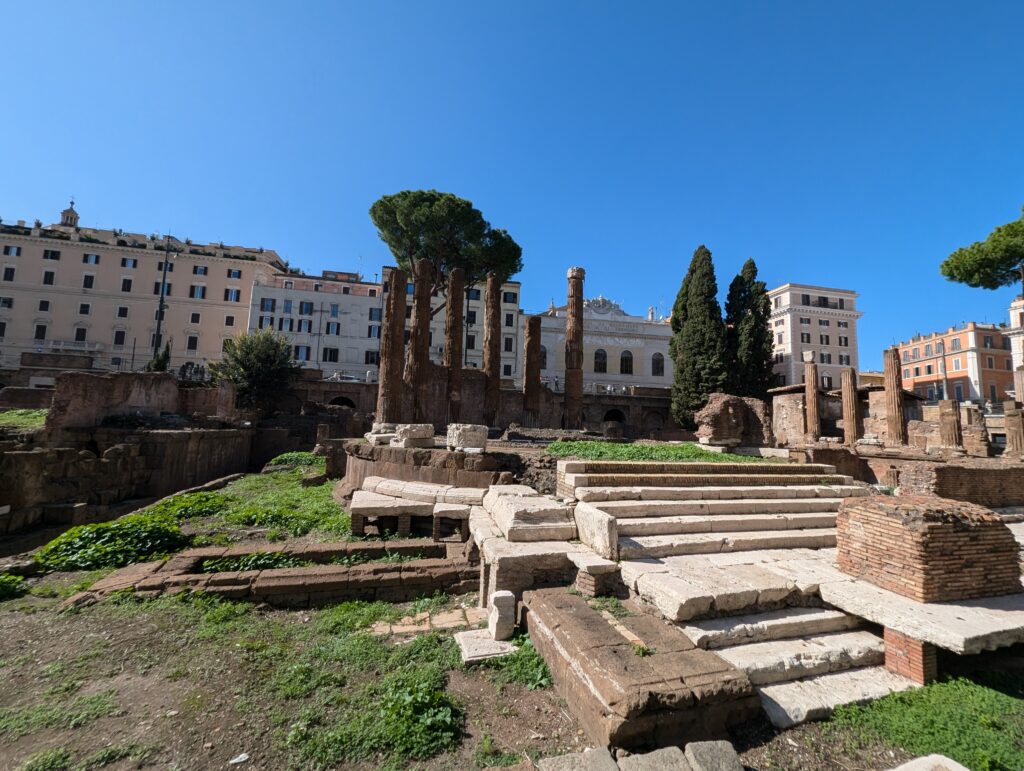
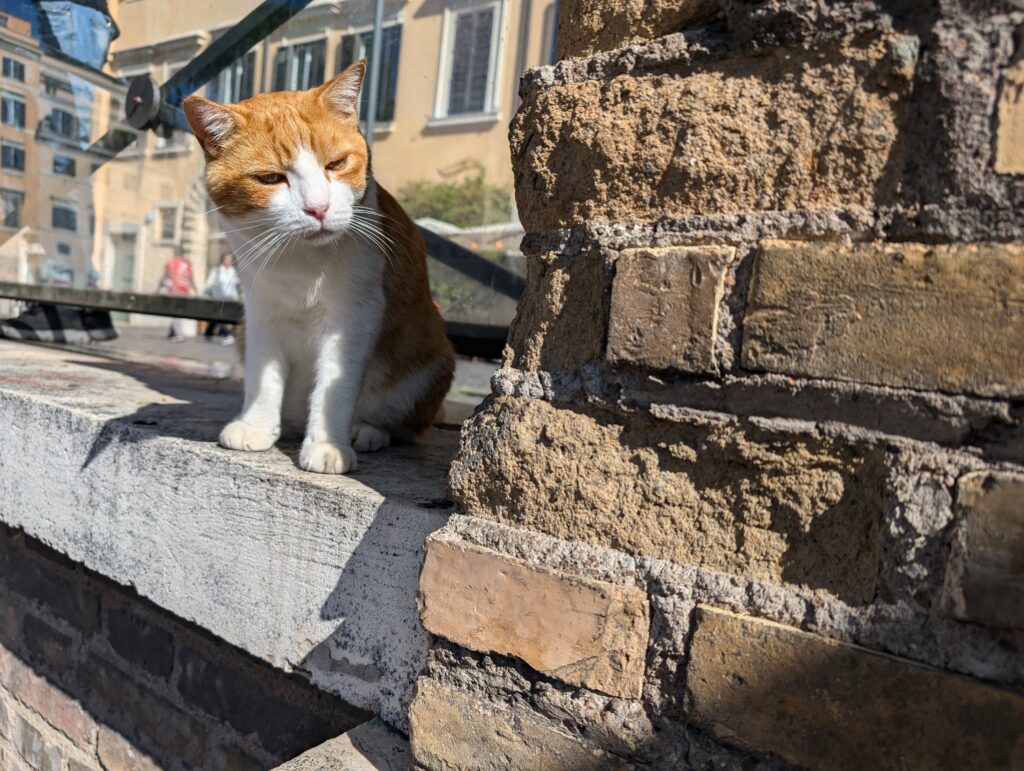
We visited the Torre Argentina Cat Sanctuary, located in the historic ruins of Largo di Torre Argentina, browsed in a number of shops, took in the view at the Victor Emmanuel II monument and walked by sites such as the Trajan’s market. If more walking isn’t your idea of fun, then I can recommend an activity where you can have a rest from walking and join a pasta-making class.
In the evening, we chose a restaurant close to our hotel.
Day Two in Rome
Morning;
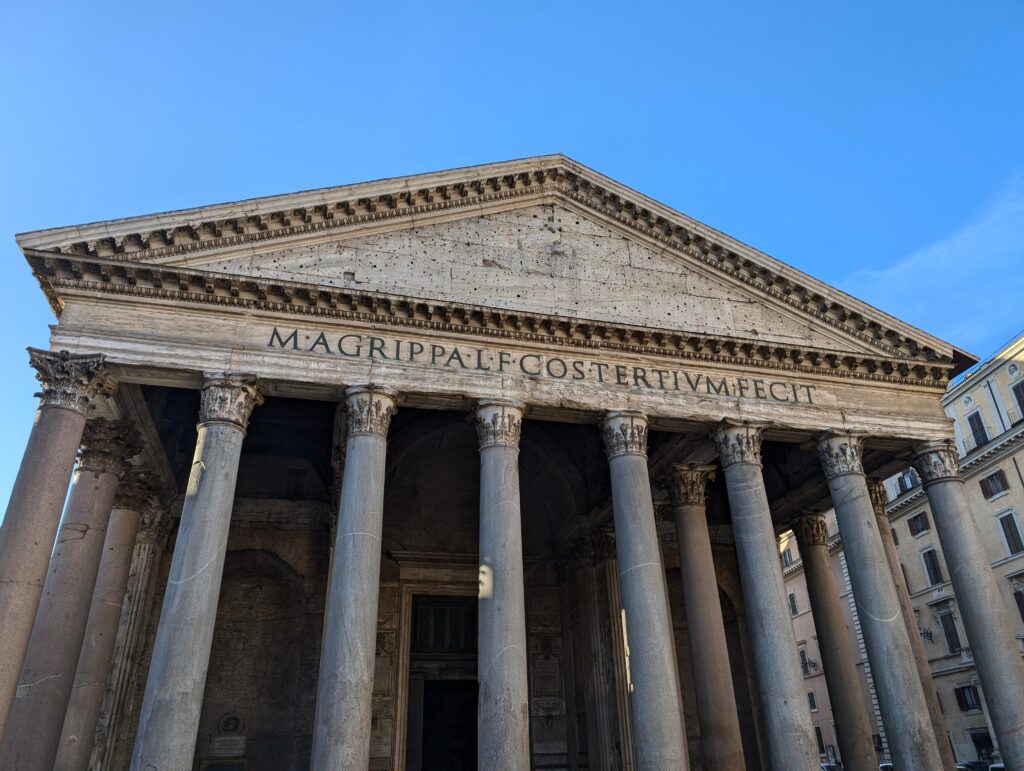
We started bright and early with a visit to the Pantheon.
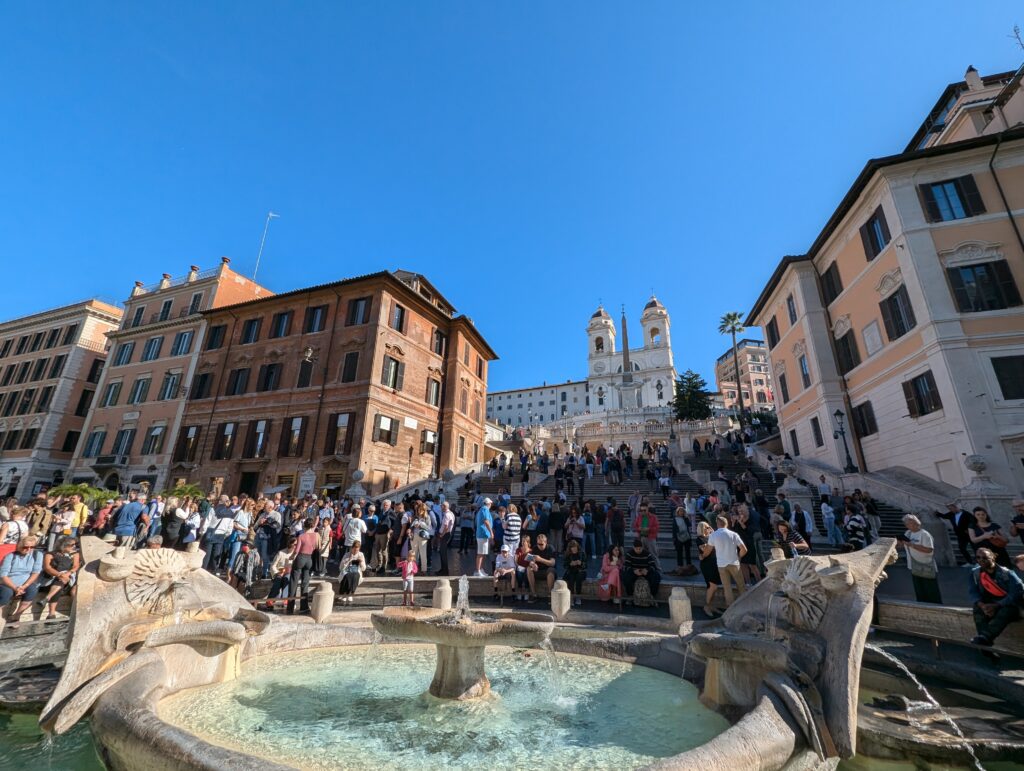
Then a walk to the Spanish Steps and on to the LEGO store.
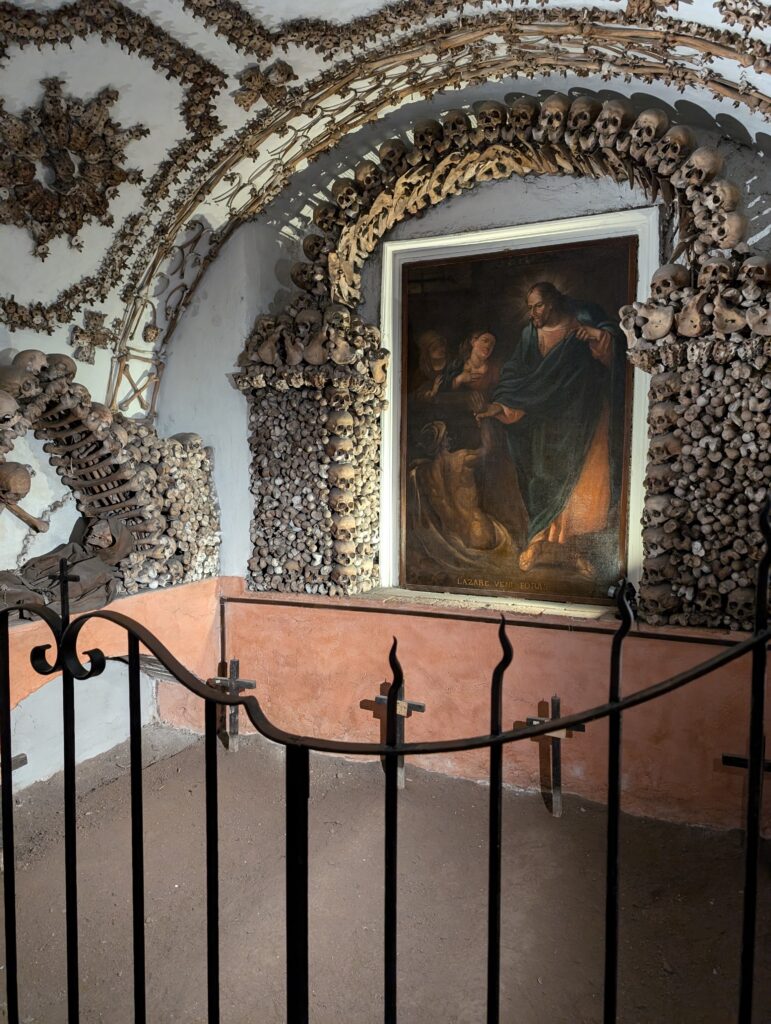
After some lunch, we joined a coach trip that took us slightly out of the city to visit some catacombs.
Afternoon:
Catacombs organised tour – Visit the “Bones Church” of Rome, which is decorated with Capuchin monk bones, and see early Christian catacombs on the Appian Way.
Evening:
Find somewhere great for dinner, and stop by the Trevi Fountain when it’s dark, as the fountain takes on a whole different look
Option for a Day three in Rome – Visiting the Vatican and more
The Vatican is an extremely popular place for tourists in Rome. Get there as early as you can. Most people start with the museums, which take you through galleries, courtyards and collections before ending at the Sistine Chapel. From there, you can walk around to St. Peter’s Square and enter the basilica, which is free but has a security queue. You can also choose to climb the dome for views over Rome if you want to add something extra.
Once you have visited the Vatican, you may want to rest your legs for a bit; three busy days in Rome are a lot to take in. If you book the City Sightseeing bus, you can take the rest of the day at your leisure and visit sites you’ve not yet made it to. The full loop takes 100 minutes, but it wouldn’t make much sense to go all the way back around to the Vatican.
The Vatican is a short walk from stop #6. Chose to this stop is the impressive Castel Sant’Angelo. Other stops worth stopping off, which you probably won’t have been to as yet, are #2 The Basilica of Santa Maria Maggiore. #4 Circus Maximus. #10 Villa Borghese and possibly walk down to the Piazza del Popolo.
A map with the main attractions above included to help you get your bearings.
Best Hotels in Rome – 3*, 4* and 5* options
Top Pick 3* Hotel in Rome Centre
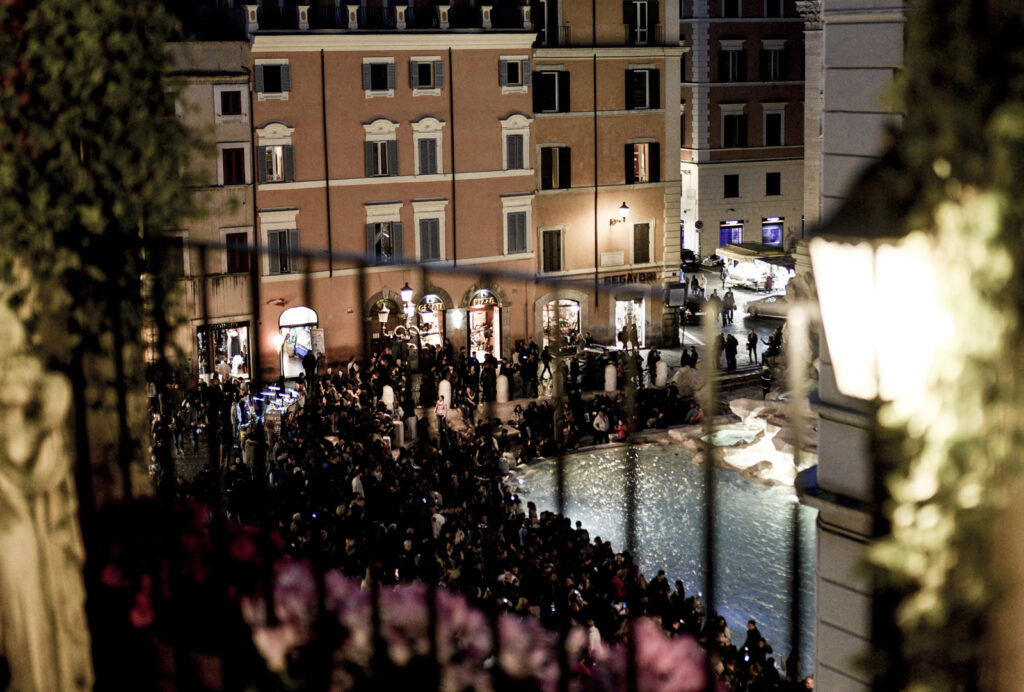
Relais Fontana Di Trevi Hotel
Hotel Highlights:
- Some rooms have a side view of the Trevi Fountain
- Very central location
Top Pick 4* Hotel in Rome Centre
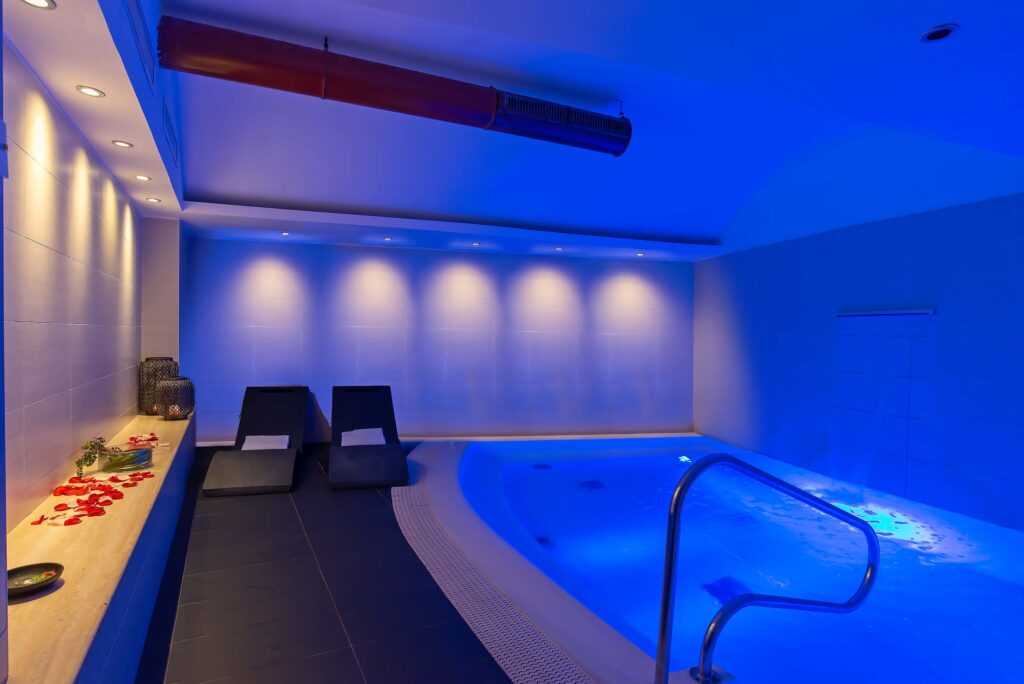
Hotel Lunetta
Hotel Highlights:
- Historic boutique hotel with a luxury spa
- Walking distance from the Piazza Navona
Top Pick 5* Hotel in Rome Centre
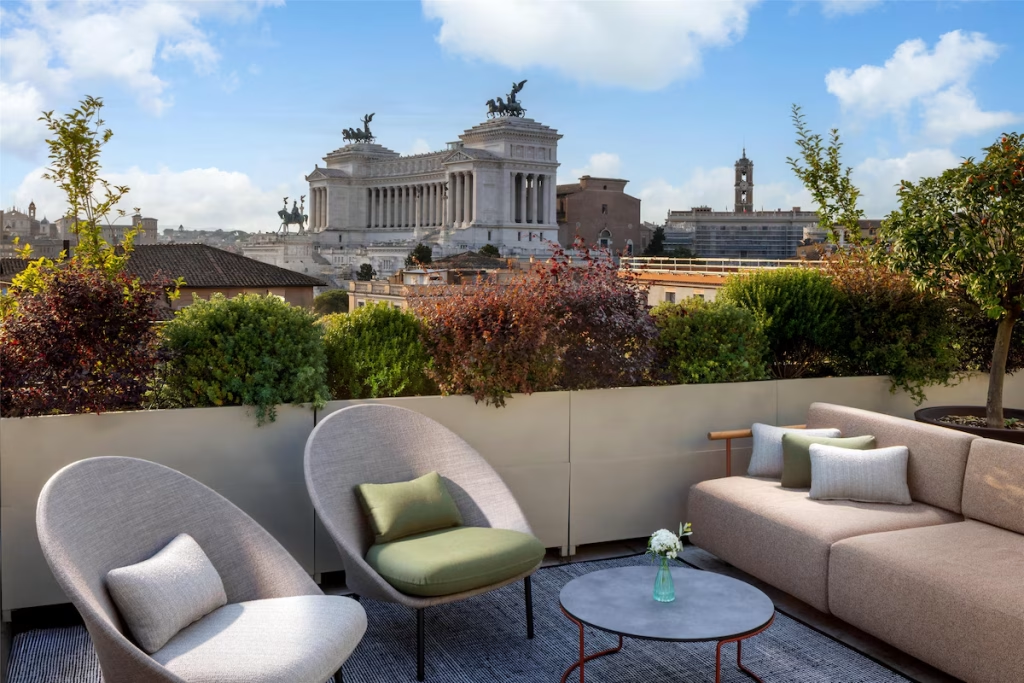
Radisson Collection Hotel, Roma Antica
Hotel Highlights:
- Close to most major sights
- Rooftop bar with panoramic views
All the great things to do in the centre of Rome
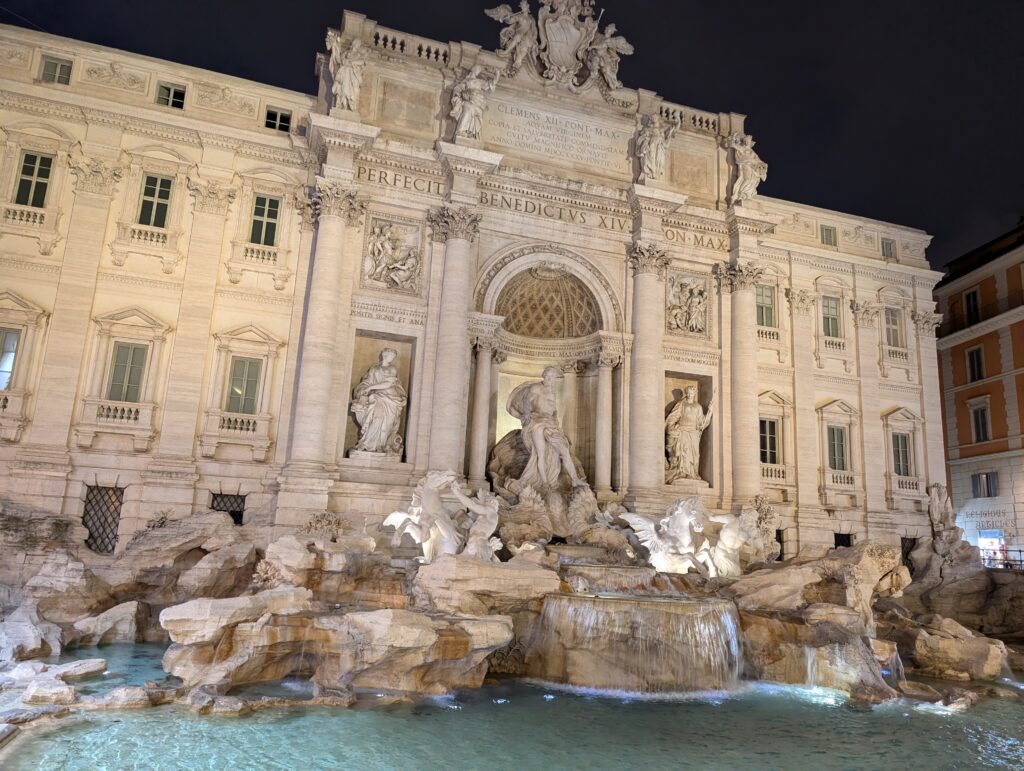
Trevi Fountain
One of Rome’s most famous landmarks, the Trevi Fountain is known for its baroque sculptures and the tradition of tossing a coin into the water. It gets busy throughout the day, so most people visit early or later in the evening (as mentioned above, to get close to the fountain, you now need to pay 2 euros per person).
Book a Combined ticket to the Colosseum, Forum, Palatine Hill and Optional arena tour
This ticket gives you access to the Colosseum, the Forum and Palatine Hill, with the option to add an arena‑floor visit for a closer look at the structure. It’s a straightforward way to see all three sites without booking separate entries.
Pantheon
The Pantheon is one of the best‑preserved ancient buildings in Rome, known for its huge dome and central oculus. Entry now requires a timed ticket, but the visit itself is quick and easy.
Catacombs organised tour
A guided catacombs tour takes you into Rome’s underground burial tunnels, where early Christians were laid to rest. It’s a structured visit, so you get clear explanations as you move through the different sections.
The Vatican
A typical Vatican visit includes the Vatican Museums, the Sistine Chapel and St. Peter’s Basilica. You can explore them in any order, and the basilica is free to enter once you’ve passed security.
Spanish Steps
The Spanish Steps connect Piazza di Spagna with the Trinità dei Monti church and are a popular spot for photos and views over the surrounding streets. Sitting on the steps isn’t allowed, but it’s still a quick, easy stop.
Largo di Torre Argentina & Cat Sanctuary
This archaeological site contains the remains of four Roman temples and is home to a well‑known cat sanctuary. You can view the ruins from street level and visit the sanctuary’s small indoor area.
Victor Emmanuel Monument II
This large white monument overlooks Piazza Venezia and offers panoramic views from its upper terraces. You can explore the lower levels for free or take the lift to the top for wider city views.
Pasta-making class
A pasta‑making class usually includes hands‑on instruction, a couple of different pasta shapes and a sit‑down meal at the end. It’s a relaxed way to learn a few basics and try what you’ve made.
City Sightseeing Bus
The hop‑on hop‑off bus loops around major sights like the Colosseum, Vatican and Piazza Venezia. It’s an easy option if you want simple transport between landmarks without navigating buses or the metro.
Train to be a Gladiator
This experience teaches basic gladiator techniques using foam or wooden weapons, often combined with a short history lesson. It’s especially popular with families and children.
Golf Cart tour with Artisanal Gelato tasting
A golf cart tour lets you cover more ground without much walking, stopping at key viewpoints and smaller streets. The gelato tasting adds a quick food stop along the way.
Photoshoot tour in a vintage Fiat 500
This tour pairs a classic Fiat 500 with a photographer who takes pictures at scenic spots around the city. It’s a light, easy activity that gives you a set of edited photos afterwards.
Where to eat in Rome
Eating in Rome’s main squares can be a bit of a tourist trap, they’re also quintessentially Roman and give you that classic “this is Rome” feeling while you sit outside and watch everything happening around you. You’ll always pay more in the big piazzas, and it’s usually cheaper to eat just a street or two away, but the setting can be worth it for the atmosphere alone. Just keep an eye on menus and bills, as some restaurants add extra charges you might not expect. We were caught out once ourselves. A quick look at Google reviews before sitting down is always a good idea.
Piazza Navona: One of the most classic places to eat outdoors in Rome. It’s busy and a bit touristy, but the fountains, street artists and open space make it a lovely setting for a long lunch or evening drink.
Campo de’ Fiori: Lively and central, with a daily market in the morning and plenty of restaurants around the edges. It’s a good choice if you want a casual meal or an aperitivo with lots of atmosphere.
Piazza della Rotonda (Pantheon Square): A great spot for a coffee or simple meal with a view of the Pantheon. It’s always busy, but the setting is hard to beat, and the surrounding streets have plenty of options.
Piazza di Pietra: A smaller, calmer square with the impressive Temple of Hadrian as the backdrop. It’s a nice alternative if you want something atmospheric but less crowded than the big landmarks.
Piazza Trilussa (Trastevere); A relaxed square on the Trastevere side of the river, good for aperitivo and people‑watching. The surrounding streets are full of trattorias and wine bars.
Top Tips for a short break in Rome
- Group sights by area so you’re not zig‑zagging across the city. Rome is walkable, but distances add up quickly.
- Expect crowds at the big landmarks and visit early or later in the day if you prefer it quieter.
- Use public transport when you need to – buses and the metro are straightforward and save your legs on a short trip.
- Eat a street or two away from the main squares for better prices and more local spots.
- Check menus and bills carefully as some restaurants add extra charges; a quick look at Google reviews helps avoid surprises.
- Carry a scarf or cover‑up for churches and the Vatican, where shoulders need to be covered.
- Wear comfortable shoes – Rome’s cobblestones are no joke, and you’ll walk more than you expect.
A short break in Rome doesn’t need to be complicated. With a few key sights booked in advance, a loose plan for each area and plenty of time left for wandering, you can see a lot without feeling rushed. The city is busy and full of contrasts, but that’s part of what makes a couple of days here so memorable: ancient landmarks, small side streets, good food and the feeling that there’s always something happening around the next corner. If you are thinking of staying for longer, there are some great day trips you can take from the centre of Rome.
Search for Cheap Flights